 Omnia Sana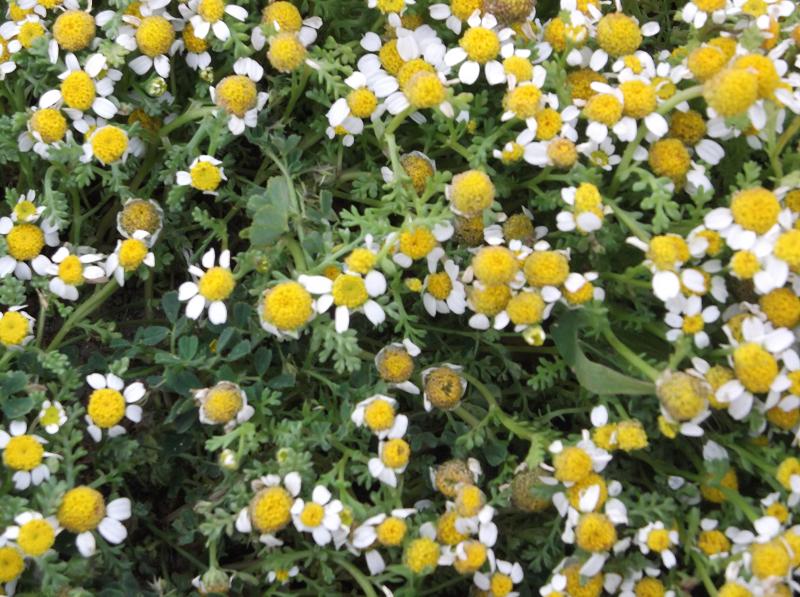
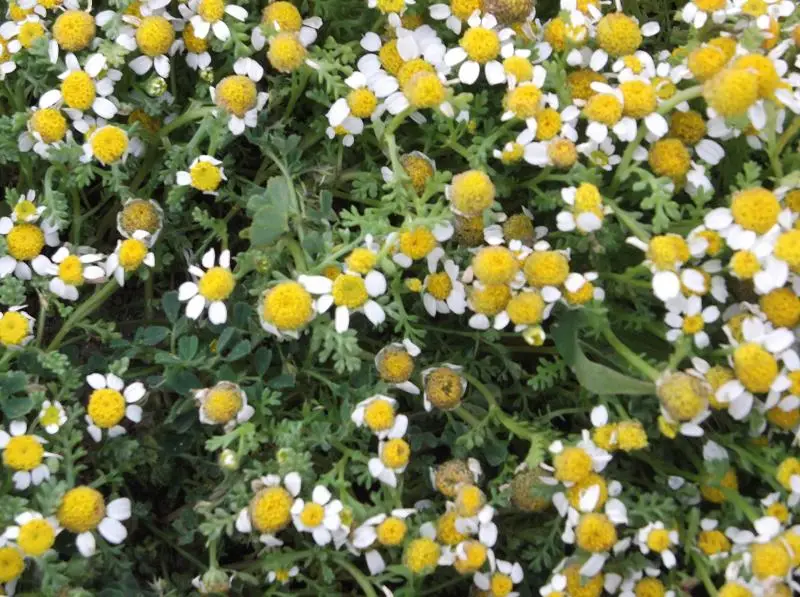
German chamomile (Matricaria chamomilla, also written Matricaria recutita) is the familiar herbal chamomile, a daisy-like annual of arable margins, waste ground, and gardens. Several similar white-and-yellow daisies grow in the same places, so confident identification depends on three things: the finely divided feathery leaves, the sweet apple-like scent, and above all the hollow, cone-shaped centre of the flower head.
Habit and leaves
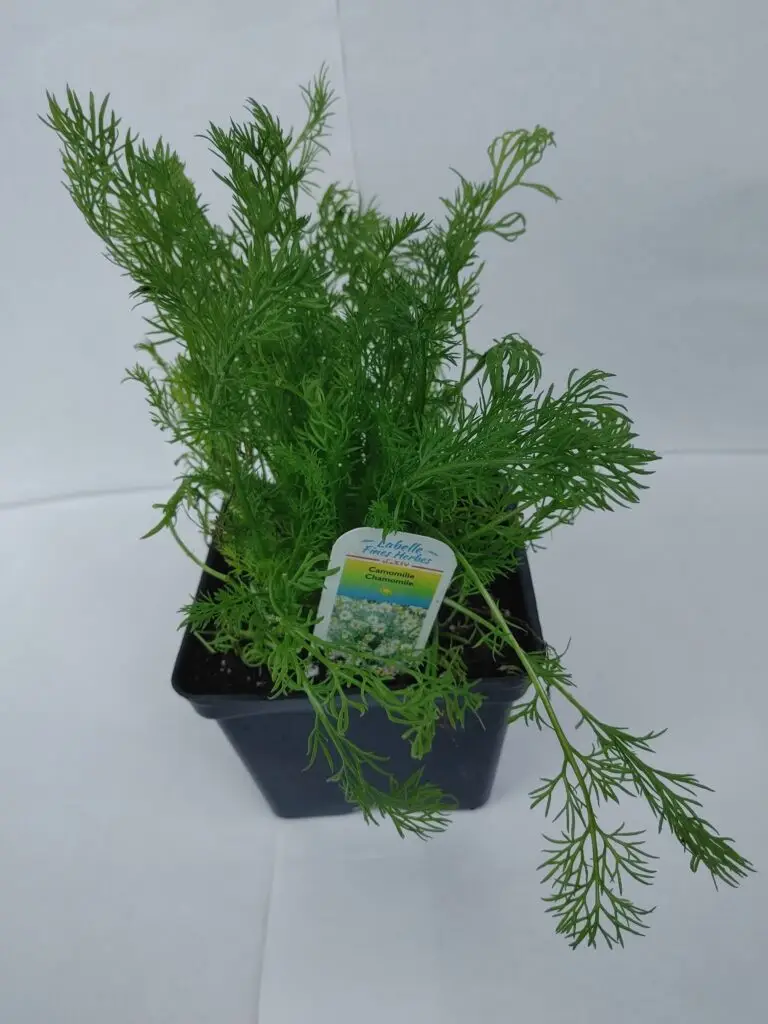
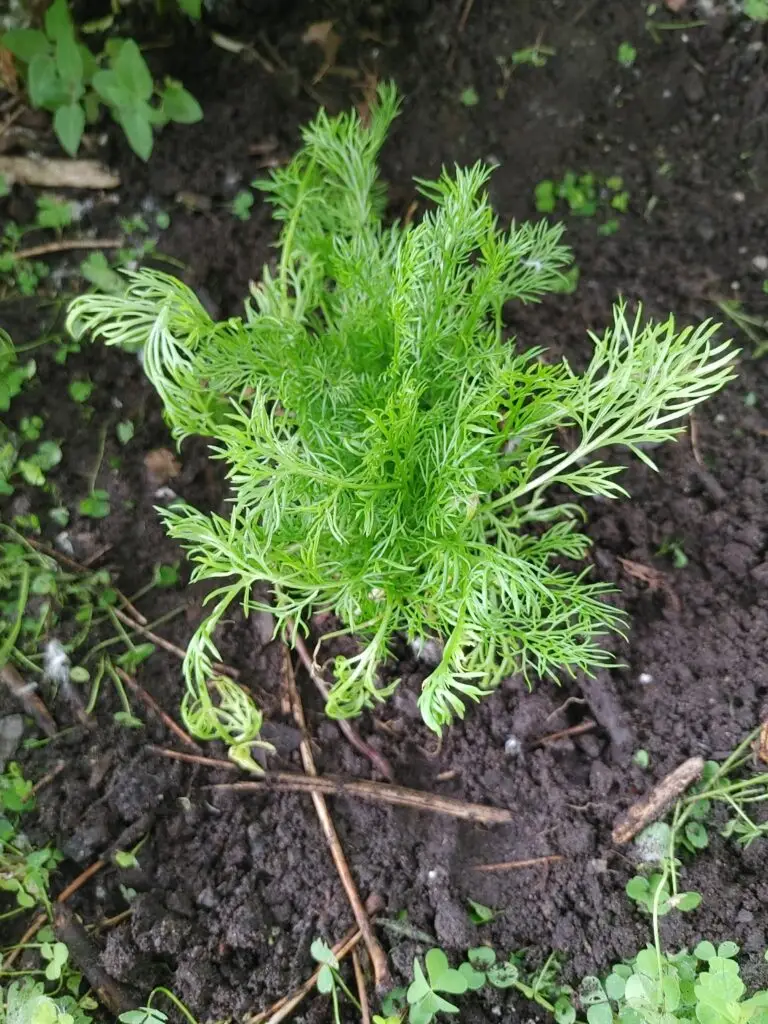
The plant is an erect, much-branched annual, usually fifteen to sixty centimetres tall and essentially hairless. The leaves are alternate and very finely divided, two or three times, into narrow, almost thread-like segments, giving the whole plant a soft, feathery appearance. This delicate foliage is shared with several of its relatives, so it confirms the group rather than the species.
Flower heads and the hollow receptacle
The flower heads are the classic daisy form: a ring of white ray florets around a central boss of yellow disc florets, each head one to two and a half centimetres across. Two features set German chamomile apart. First, as the head matures the white rays bend backwards and downward, and the yellow centre rises into a distinct cone. Second, and decisively, that central cone is hollow. If the head is sliced through with a thumbnail, the receptacle is clearly empty inside, and it bears no small scales between the florets.
Scent and look-alikes
Crushed flower heads of German chamomile give off a strong, sweet, apple-like fragrance. This is the quickest field test, because its commonest look-alike, scentless mayweed (Tripleurospermum inodorum), is almost odourless and has a solid, not hollow, receptacle. The chamomiles of the genus Anthemis, such as corn and stinking chamomile, carry small scales among the disc florets on the receptacle, which German chamomile lacks; stinking chamomile also smells unpleasant rather than sweet. Roman chamomile (Chamaemelum nobile) is a low, creeping perennial with a solid, scaly receptacle.
A reliable rule
To name a plant as German chamomile, confirm three things together: feathery, finely divided leaves; a sweet apple scent from the crushed heads; and a central yellow cone that is hollow and free of scales when cut. A solid centre, no scent, or scales among the florets points to one of the look-alikes. As with any wild plant, never rely on a single feature, and never consume a plant you cannot identify with certainty.
References
Foraging with Emily (n.d.) ‘Chamomile (German) - Matricaria chamomilla’. Available at: https://foragingwithemily.com/blogs/flowers-plants-fungi/chamomile-german-matricaria-chamomilla (Accessed: 27 June 2026).
University of Wisconsin-Madison (n.d.) ‘German Chamomile, Matricaria chamomilla’. Division of Extension. Available at: https://hort.extension.wisc.edu/articles/chamomile-matricaria-chamomilla/ (Accessed: 27 June 2026).
NatureSpot (n.d.) ‘Scented Mayweed - Matricaria chamomilla’. Available at: https://www.naturespot.org/species/scented-mayweed-0 (Accessed: 27 June 2026).
Wikipedia (n.d.) ‘Matricaria chamomilla’. Available at: https://en.wikipedia.org/wiki/Matricaria_chamomilla (Accessed: 27 June 2026).
0 Comments
Join the conversation
Log in or create a free account to share your thoughts and vote on comments.
No comments yet - be the first to share your thoughts.