 Omnia Sana
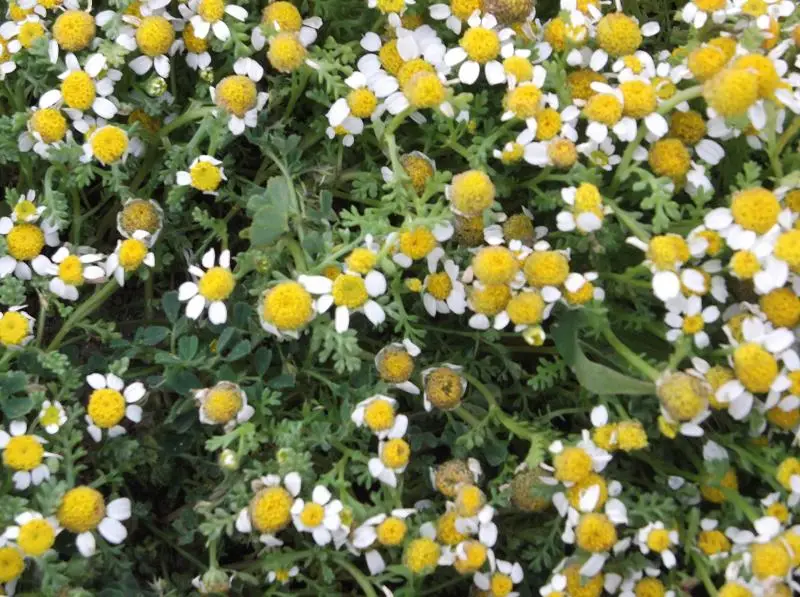
Chamomile (Matricaria chamomilla, also called German chamomile, blue chamomile or wild chamomile) is one of the most widely used medicinal herbs in the world. Traditionally it has served as a mild digestive, calming and anti-inflammatory remedy: the dried flower heads are taken as a tea for indigestion, cramping, and restlessness or poor sleep, and used topically for skin and mucous-membrane inflammation and wound healing. Modern research has since tested some of these traditional applications directly, producing clinical evidence of varying strength for a handful of uses - ranging from exploratory studies to randomized controlled trials and systematic reviews - while others remain supported mainly by chamomile’s known pharmacological actions rather than by a trial on that specific use. This article sets out what is actually known, distinguishing the well-studied benefits from the wider traditional uses, and covers chamomile’s safety profile. For a full overview of the plant see the chamomile monograph, and for the flower’s many names across languages see the chamomile name dictionary.
What gives chamomile its effects
Chamomile’s activity comes from several groups of constituents concentrated in the flower head. Steam distillation of the flowers yields an essential oil rich in alpha-bisabolol and chamazulene; chamazulene gives the oil its characteristic blue colour, and alpha-bisabolol contributes much of chamomile’s anti-inflammatory activity (El Mihyaoui et al., 2022). The flowers also contain flavonoids, including apigenin, quercetin, luteolin and rutin; apigenin is considered a key contributor to chamomile’s sedative and anxiolytic activity through its binding to GABA-A receptors (Dai et al., 2022). Coumarins such as herniarin and umbelliferone are minor constituents that add to the plant’s mild antispasmodic action, and mucilage polysaccharides contribute a soothing, demulcent effect on irritated mucous membranes. Together these constituents underlie the pharmacological actions that have been directly evidenced for chamomile: it acts as an analgesic, anti-inflammatory, antimicrobial, antispasmodic, digestive, emollient, sedative, vulnerary, anxiolytic, antidepressant and antidiabetic agent. The flowers are most often taken as an infusion, steeped in hot water, or steam-distilled into an essential oil used in topical and aromatherapy preparations.
Well-studied benefits
A small number of chamomile’s traditional uses have been tested directly in clinical trials. For anxiety, a randomized clinical trial found that long-term oral chamomile extract reduced symptoms of generalized anxiety disorder (Mao et al., 2016), building on an earlier randomized, placebo-controlled trial with the same finding (Amsterdam et al., 2009). For depression, an exploratory study reported that chamomile extract may provide antidepressant activity in anxious, depressed adults (Amsterdam et al., 2012). For pain, a randomized controlled trial found a topical chamomile oil preparation effective for knee osteoarthritis pain (Shoara et al., 2015). For blood-sugar control, a clinical trial in people with type 2 diabetes found that chamomile tea improved glycaemic indices, including measures related to HbA1c and insulin resistance (Zemestani et al., 2015). For menstrual cramps, a systematic review has examined chamomile’s effect on pain and menstrual bleeding in primary dysmenorrhea (Niazi and Moradi, 2021). For sleep, a 2024 systematic review and meta-analysis of clinical trials has specifically examined chamomile’s effect on sleep (Kazemi et al., 2024). These are the uses for which a study exists on chamomile for that specific outcome, rather than an inference from its general pharmacological actions.

Traditional uses supported by its known properties
Beyond the uses above, chamomile has a long traditional history of use for a wider range of complaints, including indigestion, bloating, headache, back pain, muscle spasm, arthritis, inflammation, minor infections, bruising, eczema, skin irritation and wounds, and as a mouthwash or gargle for mouth and throat irritation. These traditional applications are consistent with chamomile’s documented anti-inflammatory, antispasmodic, analgesic, antimicrobial, emollient and vulnerary actions, but for most of them there is no clinical trial testing chamomile against that specific condition - the case rests on the plant’s general pharmacology and long history of use rather than on a dedicated study (El Mihyaoui et al., 2022; Singh et al., 2011; McKay and Blumberg, 2006). They should be understood as traditional uses that fit chamomile’s known properties, not as conditions chamomile has been clinically proven to treat.
Safety and interactions
Chamomile is generally considered very safe when used as tea or in topical preparations. People allergic to ragweed, daisies or other plants in the Asteraceae family may react to chamomile, with itching or rash. Chamomile may slightly enhance the effect of blood-thinning medication; a published case report describes a warfarin interaction with Matricaria chamomilla (Segal and Pilote, 2006), so large amounts should be used cautiously alongside anticoagulants. Chamomile’s calming, sedative effects mean that taken together with sedatives, sleeping tablets or other central-nervous-system depressants, including alcohol, it may add to drowsiness and slowed reactions (Ghasemzadeh Rahbardar and Hosseinzadeh, 2024; Block, Gyllenhaal and Mead, 2004). Because chamomile improved blood-sugar control in a clinical trial in type 2 diabetes, combining it with diabetes medication may add to blood-sugar lowering, so blood sugar should be monitored (Zemestani et al., 2015). Normal tea amounts are usually considered safe in pregnancy, but concentrated extracts should be used with more caution, and topical use occasionally causes skin irritation in sensitive individuals. Valerian, another traditional mild sedative, is often combined with chamomile for restlessness and poor sleep; together they may enhance calming and sleep effects, but the combination can also add to drowsiness. Lemon balm, a gentle calming herb, is likewise commonly combined with chamomile for stress and sleep, where their mild sedative effects may add up, and passionflower, a gentle calming, sleep-supporting herb, is traditionally combined with chamomile too, the two reinforcing each other’s soothing, sleep-promoting effect. As with any wild plant, never consume chamomile foraged in the wild unless you can identify it with certainty - see our guide to correctly identifying chamomile before gathering it.
References
El Mihyaoui, A., Esteves da Silva, J.C.G., Charfi, S., Candela Castillo, M.E. et al. (2022) ‘Chamomile (Matricaria chamomilla L.): A Review of Ethnomedicinal Use, Phytochemistry and Pharmacological Uses’. Life. https://doi.org/10.3390/life12040479
Dai, Y.L., Li, Y., Wang, Q., Niu, F.J. et al. (2022) ‘Chamomile: A Review of Its Traditional Uses, Chemical Constituents, Pharmacological Activities and Quality Control Studies’. Molecules. https://doi.org/10.3390/molecules28010133
Mao, J.J., Xie, S.X., Keefe, J.R., Soeller, I. et al. (2016) ‘Long-term chamomile (Matricaria chamomilla L.) treatment for generalized anxiety disorder: A randomized clinical trial’. Phytomedicine. https://doi.org/10.1016/j.phymed.2016.10.012
Amsterdam, J.D., Li, Y., Soeller, I., Rockwell, K. et al. (2009) ‘A randomized, double-blind, placebo-controlled trial of oral Matricaria recutita (chamomile) extract therapy for generalized anxiety disorder’. Journal of Clinical Psychopharmacology. https://doi.org/10.1097/JCP.0b013e3181ac935c
Amsterdam, J.D., Shults, J., Soeller, I., Mao, J.J., Rockwell, K. and Newberg, A.B. (2012) ‘Chamomile (Matricaria recutita) may provide antidepressant activity in anxious, depressed humans: an exploratory study’. Alternative Therapies in Health and Medicine.
Shoara, R., Hashempur, M.H., Ashraf, A., Salehi, A., Dehshahri, S. and Habibagahi, Z. (2015) ‘Efficacy and safety of topical Matricaria chamomilla L. (chamomile) oil for knee osteoarthritis: a randomized controlled clinical trial’. Complementary Therapies in Clinical Practice. https://doi.org/10.1016/j.ctcp.2015.06.003
Zemestani, M., Rafraf, M. and Asghari-Jafarabadi, M. (2015) ‘Chamomile tea improves glycemic indices and antioxidants status in patients with type 2 diabetes mellitus’. Nutrition. https://doi.org/10.1016/j.nut.2015.07.011
Niazi, A. and Moradi, M. (2021) ‘The effect of chamomile on pain and menstrual bleeding in primary dysmenorrhea: a systematic review’. International Journal of Community Based Nursing and Midwifery. https://doi.org/10.30476/ijcbnm.2021.87219.1417
Kazemi, A., Shojaei-Zarghani, S., Eskandarzadeh, P. and Hashempur, M.H. (2024) ‘Effects of chamomile (Matricaria chamomilla L.) on sleep: A systematic review and meta-analysis of clinical trials’. Complementary Therapies in Medicine. https://doi.org/10.1016/j.ctim.2024.103071
Singh, O., Khanam, Z., Misra, N. and Srivastava, M.K. (2011) ‘Chamomile (Matricaria chamomilla L.): An overview’. Pharmacognosy Reviews. https://doi.org/10.4103/0973-7847.79103
McKay, D.L. and Blumberg, J.B. (2006) ‘A review of the bioactivity and potential health benefits of chamomile tea (Matricaria recutita L.)’. Phytotherapy Research. https://doi.org/10.1002/ptr.1900
Segal, R. and Pilote, L. (2006) ‘Warfarin interaction with Matricaria chamomilla’. CMAJ. https://doi.org/10.1503/cmaj.051191
Ghasemzadeh Rahbardar, M. and Hosseinzadeh, H. (2024) ‘Therapeutic potential of hypnotic herbal medicines: A comprehensive review’. Phytotherapy Research. https://doi.org/10.1002/ptr.8201
Block, K.I., Gyllenhaal, C. and Mead, M.N. (2004) ‘Safety and efficacy of herbal sedatives in cancer care’. Integrative Cancer Therapies. https://doi.org/10.1177/1534735404265003
0 Comments
Join the conversation
Log in or create a free account to share your thoughts and vote on comments.
No comments yet - be the first to share your thoughts.