Dandelion – Taraxacum officinale

Common Names: Dandelion, common dandelion, lion’s tooth, blowball, puffball, priest’s crown, pissenlit, wet-the-bed, Irish daisy, monk’s head

Genus: Taraxacum

Parts Used: Leaf, Root, Flower, Whole plant

Medicinal Actions: Diuretic, Bitter digestive tonic, Choleretic (bile-stimulating), Hepatic (liver support), Anti-inflammatory, Antioxidant, Prebiotic, Mild laxative

Preparation Methods: Tea/Infusion, Decoction (root), Tincture, Cooked (pot-herb), Roasted root ‘coffee’, Fresh salad leaf

Summary:

Dandelion (Taraxacum officinale) is a familiar yellow-flowered perennial of the daisy family (Asteraceae), recognised the world over by its rosette of jagged leaves, hollow milky stems and golden flower-heads that ripen into the spherical “clocks” of wind-borne seed (First Nature, n.d.; Royal Botanic Gardens, Kew, n.d.). Although widely dismissed as a lawn weed, it is one of the most useful and nutritious of all wild plants, valued for centuries across Europe, Asia and the Americas as a food and as a gentle medicine for the liver, digestion and urinary system (Sharifi-Rad et al., 2018; Herbal Reality, n.d.). The leaves are taken as a bitter salad green and a traditional diuretic, while the root – rich in the prebiotic fibre inulin – is used to support digestion and the liver and is dried and roasted as a caffeine-free coffee substitute (Kania-Dobrowolska and Baraniak, 2022; Herbal Reality, n.d.). Its very name in many languages records its actions: the English “dandelion” comes from the French dent de lion, “lion’s tooth”, for its toothed leaves, while the French pissenlit and the old English “wet-the-bed” both point to its reputation as a diuretic (First Nature, n.d.).

Distribution:

Dandelion is native to Eurasia – Europe across to Siberia, together with Macaronesia and north-west Africa – and through its extraordinary hardiness and prolific wind-blown seed it has naturalised across virtually the whole temperate world, including the Americas, southern Africa, Australia and New Zealand (Royal Botanic Gardens, Kew, n.d.; Wikipedia, n.d.). It is a plant of open, disturbed and human-made ground, thriving in lawns, pastures, meadows, roadside verges, waste places and the cracks of pavements, and it tolerates a very wide range of soils and conditions, from crowding and trampling to drought and cold (Wisconsin Horticulture, n.d.; Royal Botanic Gardens, Kew, n.d.). Its deep taproot lets it persist where many plants fail and regrow vigorously after mowing. It is abundant throughout the Baltic region and across the whole of Latvia, one of the most common and recognisable plants of meadows, lawns, verges and field margins everywhere (First Nature, n.d.).

Notes:

Dandelion is a herbaceous perennial growing from a stout, deep taproot, forming a flat basal rosette of leaves from which rise one or more smooth, hollow, leafless flowering stems (scapes) to around 5–30 cm, each bearing a single flower-head of many bright yellow strap-shaped (ligulate) florets (FSUS, n.d.; University of Massachusetts, n.d.). Every part of the plant exudes a white milky latex when broken (Royal Botanic Gardens, Kew, n.d.). The flower-heads close at night and in wet weather and, once fertilised, develop into the familiar spherical seed-head of parachute-like fruits, a single head producing up to around two thousand wind-dispersed seeds (Royal Botanic Gardens, Kew, n.d.). The common dandelion of lawns and verges is botanically not a single tidy species but an aggregate of many hundreds of near-identical apomictic microspecies (plants that set seed without fertilisation), formally written Taraxacum officinale agg., whose minute distinctions are the province of specialists nicknamed “taraxacologists” (Royal Botanic Gardens, Kew, n.d.; Botanical Society of Britain and Ireland, n.d.). Chemically the plant is rich and well studied. Its constituents include sesquiterpene lactones (taraxinic acid and its derivatives, responsible for the bitter taste), triterpenes and sterols (notably taraxasterol, taraxerol and lupeol), phenolic acids (chlorogenic, chicoric and caffeic acids), flavonoids (luteolin, isorhamnetin and their glycosides), coumarins, and the prebiotic fructan inulin, which is especially concentrated in the autumn root (Sharifi-Rad et al., 2018; Herbal Reality, n.d.). Laboratory studies of these compounds have shown diuretic, anti-inflammatory, antioxidant, antimicrobial, hepatoprotective and blood-sugar- and lipid-regulating activities, providing a rational basis for many of the plant’s traditional uses (Sharifi-Rad et al., 2018; Kania-Dobrowolska and Baraniak, 2022).

Identification in the Wild:

Dandelion is widely regarded as one of the safest and easiest wild plants to identify, with several reliable features. The leaves are hairless and deeply, sharply lobed, with the lobes usually pointing back towards the centre of the rosette – the “lion’s teeth” that give the plant its name – and they grow in a flat rosette directly from the ground with no leaves on the stem (FSUS, n.d.; University of Massachusetts, n.d.). The single most useful confirming test is the stem: each flower-head sits alone on its own smooth, hollow, unbranched stalk, and when any part of the plant is broken it bleeds a white milky sap (Mossy Oak, 2025; Royal Botanic Gardens, Kew, n.d.). The flower-head is a solid mass of many yellow ray florets, and matures into the unmistakable round, white seed-clock (FSUS, n.d.). Several common look-alikes in the daisy family can cause confusion: cat’s-ear (Hypochaeris radicata), hawkbits, hawksbeards and sow-thistles all have superficially similar yellow heads, but they can be separated because their flowering stems are typically solid, often branched and bear more than one flower-head, and their leaves are frequently hairy – whereas true dandelion always has a single head on a hollow, unbranched, leafless stem and hairless leaves (Practical Frugality, 2024; Mossy Oak, 2025). None of these look-alikes is poisonous, but the combination of jagged hairless rosette leaves, hollow single-headed stem and milky sap reliably identifies the dandelion.

When to Collect:

Different parts are gathered at different times of year. The leaves are best picked young in early spring, when the rapidly growing new growth is most tender and least bitter for salads and cooking; they remain usable through the season but grow tougher and more bitter as the year advances, when they are better cooked than eaten raw (Farm and Dairy, 2021; Practical Frugality, 2024). Across the Baltic and wider European range this means the main leaf harvest runs from spring into early summer, with a lighter second flush of growth and flowering in autumn. The flowers are gathered on dry, sunny mornings from around April to June when they are fully open (Good Grub, n.d.). The root is the part whose timing matters most: it is traditionally dug in autumn, once the top growth begins to die back, because the plant then stores its energy underground and the root is at its richest in inulin, making it sweeter and best suited to use as a roasted root and a prebiotic digestive remedy; roots dug in spring are more bitter and are favoured by some herbalists as a digestive stimulant (Good Grub, n.d.; HerbaWave, 2026). As with all wild harvesting, gather only from clean ground well away from roadsides, sprayed lawns and other contaminated places, since dandelion leaves and roots readily take up pollutants; wash roots well, chop and dry them in a warm, airy place, and dry leaves quickly in the shade (Mossy Oak, 2025; Under A Tin Roof, 2025).

Cultural Notes:

Dandelion has a long and rich place in the herbal traditions of the world. Its genus name Taraxacum is generally traced to Greek roots – commonly taraxis, “inflammation”, and akeomai, “I heal” – while another tradition derives it from an Arabic or Persian word for a bitter herb, and the species name officinale marks it as a plant of the apothecary’s store with an “official” medicinal use (Herbal Reality, n.d.; First Nature, n.d.). The Greek naturalist Theophrastus is said to have referred to it, Arab physicians of the tenth and eleventh centuries recorded its use for liver and spleen complaints, and the German botanist Leonhard Fuchs described it in 1543 for gout, diarrhoea and disorders of the spleen and liver (Herbal Reality, n.d.). Across medieval and early-modern Europe the plant was a standard household remedy and a spring tonic green, while several Native American peoples adopted the introduced plant as a medicine for kidney complaints, dyspepsia and skin conditions, and it was widely regarded as a “blood purifier” (Herbal Reality, n.d.). In traditional Chinese medicine the related Taraxacum mongolicum has a documented history reaching back to the Tang dynasty, used to “clear heat and toxins” for conditions such as mastitis, abscesses and sore throats (Wu et al., 2024; Hao et al., 2024). The plant is also deeply woven into folk life as food and drink – dandelion wine from the flowers, roasted root “coffee”, salad greens and honey-like flower syrups – and the seed-clocks are a universal children’s plaything for telling the time or making a wish. A curious modern footnote is that the milky latex of one Central Asian species, Taraxacum kok-saghyz, contains enough natural rubber that it was cultivated as a strategic rubber source during the Second World War (HerbaWave, 2026). In Latvian and broader Baltic folk practice, as across northern Europe, the young spring leaves have long been eaten as a cleansing tonic green and the plant valued as a gentle remedy for the liver, digestion and water retention (Herbal Reality, n.d.).

Medicinal Uses and Evidence:

Dandelion’s traditional uses cluster around three areas: the urinary system, digestion, and the liver. The leaf is the classic herbal diuretic, used to increase urine flow and relieve fluid retention – a use enshrined in its folk names pissenlit and “wet-the-bed” – and herbalists note that, unlike many pharmaceutical diuretics, the leaf is itself naturally high in potassium, the mineral such drugs deplete (HerbaWave, 2026; Herbal Reality, n.d.). The root and leaf are taken as bitter tonics to stimulate appetite, bile flow and digestion, and the root in particular has a long reputation as a liver and gallbladder remedy, while its inulin content acts as a prebiotic that supports the gut microbiome (Kania-Dobrowolska and Baraniak, 2022; Herbal Reality, n.d.). Modern research offers encouraging but still preliminary support. According to PubMed, a small human pilot study found that a fresh-leaf hydroethanolic extract significantly increased the frequency of urination and the urinary excretion ratio in the hours after dosing, providing the first clinical signal that the traditional diuretic use has a real basis, though the authors stressed that larger trials are needed (Clare et al., 2009; DOI). Broader reviews of the genus describe a wide range of activities demonstrated mainly in laboratory and animal studies – anti-inflammatory, antioxidant, antimicrobial, hepatoprotective and the regulation of blood sugar and blood lipids – with the triterpene taraxasterol and the plant’s phenolic acids among the compounds credited with protecting liver tissue and damping inflammation (Sharifi-Rad et al., 2018; DOI; Kania-Dobrowolska and Baraniak, 2022; DOI). Importantly, however, robust human clinical trials remain scarce: the European Medicines Agency recognises dandelion only as a traditional herbal medicinal product on the basis of long-standing use rather than proven efficacy, and there is no approved EFSA health claim for it (HerbaWave, 2026). Dandelion is therefore best regarded as a gentle, supportive food-medicine rather than a treatment for any serious condition.

Safety Notes:

Dandelion is widely considered safe, both as a food in normal culinary amounts and in customary medicinal use, with a very long record of use across many cultures (Sharifi-Rad et al., 2018). As a member of the daisy family (Asteraceae) it can occasionally cause allergic reactions or contact dermatitis in people sensitive to that family (such as those allergic to ragweed, chamomile or chrysanthemums), and the milky latex may irritate sensitive skin (Rodriguez-Fragoso et al., 2007). Because it is an effective bitter and bile-stimulant, medicinal use is traditionally avoided by people with obstruction of the bile duct or gallstones, and caution is advised in those with gallbladder or serious liver disease (Herbal Reality, n.d.). Its diuretic action means it may add to the effect of pharmaceutical diuretics, and it could in theory interact with lithium and with certain other medicines, including those processed by the liver, so anyone taking regular medication – particularly diuretics, lithium or drugs for the kidneys – should seek professional advice before using it medicinally (Rodriguez-Fragoso et al., 2007; Herbal Reality, n.d.). As dandelion readily absorbs pollutants and heavy metals from soil, only gather plants from clean ground away from roads and sprayed areas. Medicinal use during pregnancy and breastfeeding should be discussed with a qualified practitioner, and because clinical evidence in humans is still limited, dandelion should support rather than replace conventional treatment.

References:

Botanical Society of Britain and Ireland (n.d.) ‘Dandelion identification (Taraxacum)’. Available at: https://bsbi.org/identification/taraxacum (Accessed: 7 June 2026).

Clare, B.A., Conroy, R.S. and Spelman, K. (2009) ‘The diuretic effect in human subjects of an extract of Taraxacum officinale folium over a single day’, Journal of Alternative and Complementary Medicine, 15(8), pp. 929–934. doi:10.1089/acm.2008.0152.

Farm and Dairy (2021) ‘How to harvest and use dandelion roots, leaves and flowers’. Available at: https://www.farmanddairy.com/news/top-stories/how-to-harvest-and-use-dandelion-roots-leaves-and-flowers/656605.html (Accessed: 7 June 2026).

First Nature (n.d.) ‘Taraxacum officinale, Dandelion: identification, distribution, habitat’. Available at: https://www.first-nature.com/flowers/taraxacum-officinale.php (Accessed: 7 June 2026).

FSUS (n.d.) ‘Taraxacum officinale (Common Dandelion)’. Flora of the Southeastern United States. Available at: https://fsus.ncbg.unc.edu/main.php?pg=show-taxon.php&plantname=taraxacum+officinale (Accessed: 7 June 2026).

Good Grub (n.d.) ‘Plant of the Month: Dandelion!’. Available at: https://www.goodgrub.org/post/plant-of-the-month-dandelion (Accessed: 7 June 2026).

Hao, F., Deng, X., Yu, X., Wang, W., Yan, W., Zhao, X., Wang, X., Bai, C., Wang, Z. and Han, L. (2024) ‘Taraxacum: A Review of Ethnopharmacology, Phytochemistry and Pharmacological Activity’, The American Journal of Chinese Medicine, 52(1), pp. 183–215. doi:10.1142/S0192415X24500083.

HerbaWave (2026) ‘Dandelion (Taraxacum officinale) – Origin, Phytochemistry, Traditional Use’. Available at: https://herbawave.com/en/learn/ingredients/dandelion (Accessed: 7 June 2026).

Herbal Reality (n.d.) ‘Dandelion (Taraxacum officinale): Benefits, Safety, Uses’. Available at: https://www.herbalreality.com/herb/dandelion/ (Accessed: 7 June 2026).

Kania-Dobrowolska, M. and Baraniak, J. (2022) ‘Dandelion (Taraxacum officinale L.) as a Source of Biologically Active Compounds Supporting the Therapy of Co-Existing Diseases in Metabolic Syndrome’, Foods, 11(18), 2858. doi:10.3390/foods11182858.

Mossy Oak (2025) ‘How to Forage for Dandelions’. Available at: https://www.mossyoak.com/our-obsession/blogs/recipes/how-to-forage-for-dandelions (Accessed: 7 June 2026).

Practical Frugality (2024) ‘Dandelion: Foraging Guide, Recipes & Harvesting Tips’. Available at: https://www.practicalfrugality.com/dandelion/ (Accessed: 7 June 2026).

Rodriguez-Fragoso, L., Reyes-Esparza, J., Burchiel, S.W., Herrera-Ruiz, D. and Torres, E. (2007) ‘Risks and benefits of commonly used herbal medicines in Mexico’, Toxicology and Applied Pharmacology, 227(1), pp. 125–135. doi:10.1016/j.taap.2007.10.005.

Royal Botanic Gardens, Kew (n.d.) ‘Taraxacum officinale agg. (dandelion)’ Plants of the World Online. Available at: https://powo.science.kew.org/taxon/urn:lsid:ipni.org:names:254151-1 (Accessed: 7 June 2026).

Sharifi-Rad, M., Roberts, T.H., Matthews, K.R., Bezerra, C.F., Morais-Braga, M.F.B., Coutinho, H.D.M., Sharopov, F., Salehi, B., Yousaf, Z., Sharifi-Rad, M., del Mar Contreras, M., Varoni, E.M., Verma, D.R., Iriti, M. and Sharifi-Rad, J. (2018) ‘Ethnobotany of the genus Taraxacum – Phytochemicals and antimicrobial activity’, Phytotherapy Research, 32(11), pp. 2131–2145. doi:10.1002/ptr.6157.

Under A Tin Roof (2025) ‘The Ultimate Guide to Foraging Dandelions’. Available at: https://underatinroof.com/blog/the-ultimate-guide-to-foraging-dandelions-how-to-harvest-flowers-greens-and-roots (Accessed: 7 June 2026).

University of Massachusetts (n.d.) ‘Taraxacum officinale’. UMass Weed Herbarium. Available at: https://extension.umass.edu/weed-herbarium/weeds/taraxacum-officinale/ (Accessed: 7 June 2026).

Wikipedia (n.d.) ‘Taraxacum officinale’. Available at: https://en.wikipedia.org/wiki/Taraxacum_officinale (Accessed: 7 June 2026).

Wisconsin Horticulture (n.d.) ‘Dandelion, Taraxacum officinale’. University of Wisconsin-Madison Division of Extension. Available at: https://hort.extension.wisc.edu/articles/dandelion-taraxacum-officinale/ (Accessed: 7 June 2026).

Wu, J., Sun, J., Liu, M., Zhang, X., Kong, L., Ma, L., Jiang, S., Liu, X. and Ma, W. (2024) ‘Botany, Traditional Use, Phytochemistry, Pharmacology and Quality Control of Taraxaci Herba: A Comprehensive Review’, Pharmaceuticals, 17(9), 1113. doi:10.3390/ph17091113.
Yarrow – Achillea millefolium

Common Names: Yarrow, common yarrow, milfoil, thousand-leaf, soldier’s woundwort, nosebleed plant, staunchweed, bloodwort, knight’s milfoil, devil’s nettle

Genus: Achillea

Parts Used: Aerial parts, Flower, Leaf

Medicinal Actions: Styptic (haemostatic), Vulnerary (wound healing), Astringent, Anti-inflammatory, Diaphoretic, Antispasmodic, Bitter digestive tonic, Antimicrobial

Preparation Methods: Poultice, Tea/Infusion, Tincture, Salve, Styptic powder

Summary:

Yarrow (Achillea millefolium) is an aromatic perennial of the daisy family (Asteraceae), instantly recognised by its feathery, finely divided leaves and flat-topped clusters of small white (sometimes pink) flowers (The Wildlife Trusts, n.d.; Royal Horticultural Society, n.d.). It is one of the oldest and most widely used wound herbs in the world, valued across many cultures from Europe to Asia for treating bleeding wounds, inflammation, digestive and gynaecological complaints, and feverish colds (Ali et al., 2017). Its great traditional reputation is as a styptic – the fresh or powdered leaf packed onto a cut to slow bleeding – a use enshrined in country names like “soldier’s woundwort” and “nosebleed plant” (Grieve, 1931; Herbal Reality, n.d.). Internally the aerial parts are taken as a bitter digestive tonic, as a diaphoretic tea to support the body during colds and fevers, and as an antispasmodic for menstrual cramping (Ali et al., 2017; Herbal Reality, n.d.).

Distribution:

Yarrow has a circumboreal distribution, native across the temperate Northern Hemisphere – throughout Europe, western and northern Asia and North America – and naturalised well beyond its native range (Plant Reference, n.d.; Royal Botanic Gardens, Kew, n.d.). It is a plant of open, sunny, often dry ground, growing in meadows, grasslands, pastures, roadside verges, waste places and lawns, and it tolerates poor, low-fertility soils where many plants struggle (First Nature, n.d.; Royal Horticultural Society, n.d.). It spreads both by seed and by shallow rhizomes, forming dense colonies, and is so resilient to mowing and trampling that it persists readily in lawns and grassy paths (North Carolina Extension, n.d.). It is common throughout the Baltic region and across Latvia, a familiar sight on verges, field margins and dry meadows everywhere (First Nature, n.d.).

Notes:

Yarrow is a rhizomatous herbaceous perennial growing to around 30–90 cm tall, with upright, slightly woolly stems and soft, aromatic, fern-like leaves that are bi- to tripinnately divided into thread-like segments – the feature that gives the species its name, millefolium, meaning “a thousand leaves” (Plant Reference, n.d.; United States Forest Service, n.d.). The tiny flower-heads are gathered into dense, flat-topped corymbs, each head bearing a few short white (occasionally pink) ray florets around a cluster of disc florets, and they are much visited by bees, hoverflies and butterflies (First Nature, n.d.; Royal Horticultural Society, n.d.). Chemically yarrow is complex and famously variable, with many recognised chemotypes; its constituents include an essential oil rich in monoterpenes and sesquiterpenes (such as chamazulene, which gives the distilled oil its blue colour, along with sabinene, 1,8-cineole, camphor and α-bisabolol), flavonoids (apigenin, luteolin, rutin, quercetin), sesquiterpene lactones, phenolic acids, tannins, coumarins, the amino-acid derivative betonicine, and the alkaloid-like compound achilleine (Ali et al., 2017). Laboratory studies of these compounds have demonstrated anti-inflammatory, antioxidant, antimicrobial, antispasmodic, antiulcer and wound-healing activities, lending support to many of the plant’s traditional uses (Ali et al., 2017). The aerial parts, harvested in flower, are the main medicinal material, used fresh or dried as poultices, teas, tinctures and styptic powders (Herbal Reality, n.d.).

Identification in the Wild:

Yarrow is one of the most distinctive wayside plants once its two key features are known: the leaves and the flower-heads. The leaves are soft, aromatic and very finely divided into many narrow segments, giving a feathery or fern-like appearance quite unlike most meadow plants (United States Forest Service, n.d.; Royal Horticultural Society, n.d.). The flowers are small and packed into flat-topped clusters (corymbs) held on upright stems, usually white but sometimes pale pink, each tiny head made up of a few rounded ray florets surrounding a denser centre (First Nature, n.d.). Because the flower-heads are flat-topped, yarrow is sometimes mistaken at a glance for a member of the carrot family (Apiaceae), but it is a true member of the daisy family, and crushing a leaf releases a strong, characteristic aromatic, slightly medicinal scent that helps confirm it (First Nature, n.d.). Its close relative sneezewort (Achillea ptarmica) has undivided, toothed leaves and larger, fewer flower-heads and grows in damper ground, so the combination of feathery leaves, flat white flower clusters and aromatic scent reliably identifies common yarrow (First Nature, n.d.). Care should always be taken to distinguish yarrow from superficially similar white-flowered umbellifers, some of which are highly poisonous; the feathery, non-umbellifer leaf and the aromatic scent are the safest distinguishing features (First Nature, n.d.).

When to Collect:

The aerial parts – the upper leafy stems together with the flowers – are gathered when the plant is in full bloom, which across the Baltic and wider European range runs from around June to October, with the plants generally at their best in mid-summer (First Nature, n.d.; United States Forest Service, n.d.). Harvesting in flower captures the plant at the peak of its aromatic essential-oil and flavonoid content. Cut the flowering tops on a dry day once the dew has lifted, and a common practice is to take only the top portion of each plant and leave the lower two-thirds to regrow, allowing a stand to be cut more than once over a long season (Joybilee Farm, n.d.). The fresh tops can be used directly for poultices and tinctures, or tied in small bundles and dried in a single layer in a warm, airy, shaded place; the dried leaves can then be powdered and stored in a jar for use as a styptic first-aid powder (Joybilee Farm, n.d.; Herbal Reality, n.d.). As with all wild harvesting, gather away from roadsides, sprayed verges and other contaminated ground, and be confident of the identification before picking (First Nature, n.d.).

Cultural Notes:

Few plants carry as martial a history as yarrow. Its genus name, Achillea, comes from the Greek hero Achilles, who according to legend was taught by the centaur Chiron to use the herb to staunch the bleeding wounds of his soldiers during the Trojan War (United States Forest Service, n.d.; Grieve, 1931). That battlefield reputation echoes down the centuries in its many country names – soldier’s woundwort, herba militaris, knight’s milfoil, staunchweed and bloodwort – and yarrow was carried in herbal first-aid kits through medieval wars and beyond (Grieve, 1931; Sacred Plant Co, 2025). The name “nosebleed” reflects a curious double tradition: the leaves were used both to stop nosebleeds and, rolled and inserted, deliberately to start one, for instance to relieve a congested headache (Northwest School of Aromatic Medicine, 2026). Beyond wound care, yarrow was long an apothecary’s herb and was even used in the Middle Ages as one of the bittering herbs in gruit, the herb mixture used to flavour ale before hops became common (Royal Horticultural Society, n.d.). It also carries a rich tradition of divination and protection in European and Chinese folk custom, dried yarrow stalks being the classic tool for casting the I Ching (Northwest School of Aromatic Medicine, 2026). In Latvian and broader Baltic folk practice, as across northern Europe, yarrow has long been a standard meadow remedy for wounds, colds and women’s complaints (Herbal Reality, n.d.).

Medicinal Uses and Evidence:

Yarrow’s best-known use is as a styptic and wound healer. Herbalists apply the fresh crushed leaf, or a powder of the dried herb, directly to minor cuts, grazes and shaving nicks to slow bleeding, and use it in poultices, salves and washes to clean and support the healing of wounds, where it is regarded as astringent, anti-inflammatory and antimicrobial (Herbal Reality, n.d.; Joybilee Farm, n.d.). The hemostatic effect is traditionally attributed to its tannins and to the constituent achilleine, although this specific mechanism rests largely on long traditional use rather than robust human trials (Sacred Plant Co, 2025). Internally, yarrow is a classic bitter digestive tonic taken to stimulate appetite and bile flow, a warming diaphoretic tea used at the onset of colds and fevers to support the body’s response, and an antispasmodic used for menstrual cramps and to regulate flow (Ali et al., 2017; Herbal Reality, n.d.). Modern research offers partial support for these uses. The extensive review by Ali and colleagues found that in-vitro and animal studies confirm yarrow’s anti-inflammatory, antioxidant, antimicrobial, antispasmodic, antiulcer and wound-healing activities, providing a rational basis for many of its traditional applications (Ali et al., 2017). An animal study reported that yarrow extract accelerated wound healing in rabbits (Hemmati et al., 2002), and a double-blind randomised controlled trial found that a yarrow tea taken over two menstrual cycles significantly reduced the severity of pain in young women with primary dysmenorrhea compared with placebo (Jenabi and Fereidoony, 2015). Even so, the authors of these reviews stress that well-designed human clinical trials remain limited, so yarrow is best used as a gentle supportive remedy rather than a proven treatment for serious conditions (Ali et al., 2017).

Safety Notes:

Yarrow is generally regarded as safe in culinary amounts and in customary medicinal use, with a very long record of topical use on wounds (Ali et al., 2017). As a member of the daisy family (Asteraceae) it can, however, cause allergic reactions or contact dermatitis in people sensitive to that family (such as those allergic to ragweed, chamomile or chrysanthemums), and handling the fresh plant in sunlight can occasionally cause photosensitivity (Ali et al., 2017). Because yarrow can stimulate the uterus and influence menstruation, its medicinal use is traditionally avoided during pregnancy, and caution is advised while breastfeeding (Herbal Reality, n.d.). It may also interact with anticoagulant, sedative and blood-pressure medications and with drugs metabolised by the liver, so anyone on regular medication should seek professional advice before using it medicinally (Ali et al., 2017). Correct identification is essential, since several poisonous white-flowered umbellifers can be confused with yarrow by the inexperienced, and clinical evidence in humans is still limited, so yarrow should support rather than replace conventional treatment, with deep or infected wounds always warranting proper medical care (First Nature, n.d.; Ali et al., 2017).

References:

Ali, S.I., Gopalakrishnan, B. and Venkatesalu, V. (2017) ‘Pharmacognosy, Phytochemistry and Pharmacological Properties of Achillea millefolium L.: A Review’, Phytotherapy Research, 31(8), pp. 1140–1161. doi:10.1002/ptr.5840.

First Nature (n.d.) ‘Achillea millefolium, Yarrow: identification, distribution, habitat’. Available at: https://www.first-nature.com/flowers/achillea-millefolium.php (Accessed: 7 June 2026).

Grieve, M. (1931) A Modern Herbal. London: Jonathan Cape. Available at: https://botanical.com/botanical/mgmh/y/yarrow03.html (Accessed: 7 June 2026).

Hemmati, A.A., Arzi, A. and Amin, M. (2002) ‘Effect of Achillea millefolium extract in wound healing of rabbit’, Journal of Natural Remedies, 2(2), pp. 164–167.

Herbal Reality (n.d.) ‘Yarrow (Achillea millefolium): Benefits, Uses, Safety’. Available at: https://www.herbalreality.com/herb/yarrow/ (Accessed: 7 June 2026).

Jenabi, E. and Fereidoony, B. (2015) ‘Effect of Achillea millefolium on relief of primary dysmenorrhea: a double-blind randomized clinical trial’, Journal of Pediatric and Adolescent Gynecology, 28(5), pp. 402–404. doi:10.1016/j.jpag.2014.12.008.

Joybilee Farm (n.d.) ‘How to Stop Bleeding with Yarrow Styptic’. Available at: https://joybileefarm.com/how-to-stop-bleeding-yarrow/ (Accessed: 7 June 2026).

North Carolina Extension (n.d.) ‘Achillea millefolium’. North Carolina Extension Gardener Plant Toolbox. Available at: https://plants.ces.ncsu.edu/plants/achillea-millefolium/ (Accessed: 7 June 2026).

Northwest School of Aromatic Medicine (2026) ‘Yarrow in Herbal & Aromatic Medicine: History, Uses, and Energetics’. Available at: https://aromaticmedicineschool.com/yarrow-herbal-medicine-history-uses-energetics/ (Accessed: 7 June 2026).

Plant Reference (n.d.) ‘Achillea millefolium (common yarrow) – Identification & Care Guide’. Available at: https://www.plantref.org/plants/achillea-millefolium (Accessed: 7 June 2026).

Royal Botanic Gardens, Kew (n.d.) ‘Achillea millefolium L.’ Plants of the World Online. Available at: https://powo.science.kew.org/taxon/urn:lsid:ipni.org:names:181164-1 (Accessed: 7 June 2026).

Royal Horticultural Society (n.d.) ‘Achillea millefolium (common yarrow)’. Available at: https://www.rhs.org.uk/plants/311/achillea-millefolium/details (Accessed: 7 June 2026).

Sacred Plant Co (2025) ‘Yarrow: The Warrior’s Wound Healer’. Available at: https://sacredplantco.com/blogs/natures-pharmacy-exploring-the-historical-uses-and-health-benefits-of-medicinal-herbs/the-warrior-s-herb-that-bridged-ancient-legends-and-modern-wound-care (Accessed: 7 June 2026).

The Wildlife Trusts (n.d.) ‘Yarrow’. Available at: https://www.wildlifetrusts.org/wildlife-explorer/wildflowers/yarrow (Accessed: 7 June 2026).

United States Forest Service (n.d.) ‘Common Yarrow (Achillea millefolium)’. Plant of the Week. Available at: https://www.fs.usda.gov/wildflowers/plant-of-the-week/achillea_millefolium.shtml (Accessed: 7 June 2026).

Broadleaf Plantain – Plantago major

Common Names: Broadleaf plantain, greater plantain, common plantain, waybread, white man’s footprint, soldier’s herb, healing blade, cuckoo’s bread, rat’s tail

Genus: Plantago

Parts Used: Leaf, Aerial parts, Seed

Medicinal Actions: Vulnerary (wound healing), Anti-inflammatory, Astringent, Demulcent, Expectorant, Antimicrobial, Antioxidant

Preparation Methods: Poultice, Cooked, Tea/Infusion, Tincture, Salve

Summary:

Broadleaf plantain (Plantago major) is a low-growing perennial of the Plantaginaceae family that grows as a flat rosette of broad, ribbed leaves on lawns, paths and waste ground throughout the world (The Wildlife Trusts, n.d.; Royal Horticultural Society, n.d.). Despite being dismissed today as a common lawn weed, its leaves have been used as a wound-healing remedy for centuries in almost every part of the world, alongside uses for ailments of the skin, respiratory organs, digestive organs, the circulation and against infection and pain (Samuelsen, 2000). The fresh leaf, crushed or chewed into a “spit poultice”, is a classic field first-aid dressing for cuts, stings and insect bites, while infusions of the leaf have a long history as a soothing remedy for coughs and irritated tissues (Herbal Reality, n.d.; Grieve, 1931). It is also an edible, highly nutritious wild green, rich in calcium and vitamins A, C and K (North Carolina Extension, n.d.).

Distribution:

Native to most of Europe and to northern and central Asia, broadleaf plantain has been carried by people across the globe and is now naturalised on every continent except Antarctica (Royal Botanic Gardens, Kew, n.d.; Samuelsen, 2000). It thrives in compacted, disturbed and trampled ground – lawns, pavements, cart tracks, field edges, roadsides and waste places – and tolerates a very wide range of soils, including heavy and compacted ones (Royal Horticultural Society, n.d.; The Wildlife Trusts, n.d.). Because it follows human activity so faithfully it is abundant across the Baltic region and throughout Latvia wherever the ground has been disturbed, from garden paths and farmyards to roadside verges (The Wildlife Trusts, n.d.).

Notes:

Broadleaf plantain is a herbaceous perennial forming a basal rosette of leaves 15–30 cm across, from which slender, leafless flower spikes rise to around 13–15 cm, occasionally taller (Royal Horticultural Society, n.d.; The Wildlife Trusts, n.d.). The small, greenish-brown wind-pollinated flowers are packed into a dense narrow spike, and a single plant can produce many thousands of tiny seeds in a growing season (North Carolina Extension, n.d.). Chemically the plant is unusually well studied: it contains biologically active polysaccharides, lipids, caffeic acid derivatives, flavonoids, iridoid glycosides and terpenoids, along with alkaloids and organic acids (Samuelsen, 2000). Among the most important constituents are the iridoid glycoside aucubin and its relative catalpol, the caffeic acid esters plantamajoside and acteoside (verbascoside), the flavonoids baicalein, luteolin and hispidulin, the cell-proliferative compound allantoin, mucilage and the triterpenes ursolic and oleanolic acid (Adom et al., 2017; Samuelsen, 2000). These compounds underpin a range of activities demonstrated in laboratory studies, including wound healing, anti-inflammatory, analgesic, antioxidant, weak antibiotic, immunomodulating and antiulcerogenic effects (Samuelsen, 2000). Traditionally the leaf is the main medicinal part – applied fresh as a poultice or salve to wounds, stings and inflamed skin, taken as a tea or tincture for coughs, catarrh and diarrhoea, and the mucilaginous seeds used as a gentle bulk laxative (Herbal Reality, n.d.; Grieve, 1931).

Identification in the Wild:

Broadleaf plantain is one of the easier wild plants to recognise once its key features are known. It grows as a flat rosette pressed close to the ground, with broad, oval to egg-shaped leaves 5–20 cm long carried on distinct stalks (petioles) almost as long as the leaf blade itself (Royal Botanic Gardens, Kew, n.d.; North Carolina Extension, n.d.). The clearest single feature is the venation: five to nine prominent, parallel veins run the length of each leaf, and if a leaf is gently pulled apart these veins separate out as tough, elastic, string-like fibres – a quick field test that distinguishes plantain from look-alikes (Edible Wild Food, n.d.; The Herbal Medic, n.d.). From the centre of the rosette rise slender, leafless stalks topped with a dense, narrow spike of tiny greenish-brown flowers, often likened to a rat’s tail, which give the plant its country name (The Wildlife Trusts, n.d.). Its close relative ribwort plantain (Plantago lanceolata) has much narrower, lance-shaped leaves and a short, dark, almost cone-like flower head, but the two share the same parallel-veined leaves and are used interchangeably in herbal practice (The Herbal Medic, n.d.; Herbal Reality, n.d.). The leaves are tough and resilient to trampling, and broadleaf plantain’s habit of carpeting paths and lawns, combined with the stringy leaf veins and rat’s-tail flower spike, makes confident identification straightforward (The Wildlife Trusts, n.d.).

When to Collect:

The leaves are the main part to gather and can be collected throughout the growing season, which across the Baltic and wider European range runs from roughly spring through to autumn; the plant flowers from around June to October and the leaves can persist into winter in milder spells (The Wildlife Trusts, n.d.; North Carolina Extension, n.d.). For poultices and other topical first aid the fresh leaf is preferred, picked as needed, since the watery mucilage that makes the crushed leaf cling to the skin is at its best when fresh (Herbal Reality, n.d.). Young leaves gathered in spring and early summer are the most tender for eating as a pot-herb, becoming tougher and more fibrous as the season advances (North Carolina Extension, n.d.). Choose clean, green, undamaged leaves away from roadsides, sprayed lawns and other sources of contamination, and gather on a dry day once the dew has lifted (The Herbal Medic, n.d.). Leaves for teas, tinctures and dried storage are best dried quickly in a single layer in the shade, as research has shown that the active polyphenol and iridoid content is significantly better preserved by gentle, low-temperature drying than by drying at higher temperatures (Zubair, 2012). The seeds can be stripped from the spikes in late summer and autumn once they have ripened and turned brown (North Carolina Extension, n.d.).

Cultural Notes:

Few weeds carry as much history as broadleaf plantain. The genus name Plantago derives from the Latin planta, meaning the sole of the foot, a reference both to the broad flat leaves and to the plant’s habit of springing up along trodden paths (A Wandering Botanist, 2013). In Anglo-Saxon England it was known as waybread and revered as one of the nine sacred herbs of the tenth-century Lacnunga manuscript, named in the Old English Nine Herbs Charm as a protector against poison and infection (Nine Herbs Charm, n.d.). It was valued by classical and medieval physicians from Dioscorides onward, and the seventeenth-century English herbalist Nicholas Culpeper held it in high regard (Grieve, 1931; Living Plant Wisdom, n.d.). When Europeans crossed the Atlantic the plant travelled with them in the mud of their boots and the seed of their livestock, springing up around every new settlement, so that several Native American peoples called it “white man’s footprint” (Royal Botanic Gardens, Kew, n.d.; North Carolina Extension, n.d.). Its tough, trample-resistant leaves and deep roots also make it valuable for stabilising and rehabilitating compacted, eroded soils (North Carolina Extension, n.d.). In Latvian and broader Baltic folk practice, as across northern Europe, the fresh leaf has long been the household remedy reached for first when skin is cut, grazed, stung or bitten (Herbal Reality, n.d.).

Medicinal Uses and Evidence:

Broadleaf plantain’s great reputation is as a tissue healer. Herbalists describe the fresh, mashed or chewed leaf as a “green bandage” or “green sticking plaster” applied to insect bites, stings, minor wounds, grazes, sunburn, rashes and splinters, where its cooling, demulcent and mildly astringent nature soothes inflammation and its “drawing” action is said to help lift out stingers, splinters and venom (Florida School of Holistic Living, n.d.; Herbal Reality, n.d.). A practical field method is the “spit poultice”: a leaf is chewed so that saliva mixes with the leaf mucilage to form a sticky gel that adheres to the skin like a dressing (Herbal Reality, n.d.). Internally, the tannin content makes a strong leaf tea a traditional remedy for diarrhoea, while the leaf’s soothing, expectorant qualities have long been used for coughs, catarrh and irritated airways (Herbal Reality, n.d.; Grieve, 1931). Modern laboratory work lends real support to these uses. Water- and ethanol-based extracts of P. major leaf have been shown to stimulate the proliferation and migration of oral epithelial cells in an in-vitro scratch assay – a standard test of wound-healing potential – with the more polyphenol-rich ethanol extracts performing best at appropriate concentrations (Zubair et al., 2012). The same extracts showed anti-inflammatory activity in an NF-κB assay and promoted healing in ex-vivo experiments on detached pig ears, leading the researchers to conclude that the traditional wound-healing use has a genuine biochemical basis (Zubair, 2012). Extracts also possess antimicrobial and antioxidant activity in the laboratory, consistent with the plant’s folk use on wounds and in the mouth (Adom et al., 2017). Even so, robust human clinical trials remain limited, so plantain is best regarded as a gentle supportive remedy rather than a substitute for medical treatment of serious wounds or infections (Samuelsen, 2000).

Safety Notes:

Broadleaf plantain is generally regarded as safe, both as a food in normal culinary amounts and in customary medicinal use, and it has a long record of topical use on the skin without significant problems (Samuelsen, 2000; Herbal Reality, n.d.). Allergic reactions are possible but uncommon, and the plant’s abundant wind-borne pollen can contribute to hay fever in sensitive people. As with any wild plant, correct identification is essential before use, and material should be gathered away from roadsides, sprayed lawns and other contaminated ground (The Herbal Medic, n.d.). Medicinal use during pregnancy and breastfeeding, or alongside prescribed medication, should be approached cautiously and discussed with a qualified practitioner. Clinical evidence in humans is still limited, so plantain should support rather than replace conventional treatment, and deep, infected or serious wounds always warrant proper medical care (Samuelsen, 2000).

References:

A Wandering Botanist (2013) ‘Plant Story – Plantains (Plantago), Tracking Your Footsteps All Over the World’. Available at: http://khkeeler.blogspot.com/2013/11/plant-story-plantains-plantago-tracking.html (Accessed: 7 June 2026).

Adom, M.B., Taher, M., Mutalabisin, M.F., Amri, M.S., Abdul Kudos, M.B., Wan Sulaiman, M.W.A., Sengupta, P. and Susanti, D. (2017) ‘Chemical constituents and medical benefits of Plantago major’, Biomedicine & Pharmacotherapy, 96, pp. 348–360. doi:10.1016/j.biopha.2017.09.152.

Edible Wild Food (n.d.) ‘Broadleaf Plantain (Plantago major)’. Available at: https://www.ediblewildfood.com/broadleaf-plantain.aspx (Accessed: 7 June 2026).

Florida School of Holistic Living (n.d.) ‘Plantain’. Available at: https://www.holisticlivingschool.org/2020/02/25/march-plantain/ (Accessed: 7 June 2026).

Grieve, M. (1931) A Modern Herbal. London: Jonathan Cape. Available at: https://botanical.com/botanical/mgmh/p/planta14.html (Accessed: 7 June 2026).

Herbal Reality (n.d.) ‘Plantain (Plantago major): Benefits, Safety, Uses’. Available at: https://www.herbalreality.com/herb/plantain/ (Accessed: 7 June 2026).

Living Plant Wisdom (n.d.) ‘Living Plant Wisdom Profile: Plantain (Plantago major)’. Available at: https://holisticfarming.substack.com/p/living-plant-wisdom-profile-plantain (Accessed: 7 June 2026).

Nine Herbs Charm (n.d.) Wikipedia. Available at: https://en.wikipedia.org/wiki/Nine_Herbs_Charm (Accessed: 7 June 2026).

North Carolina Extension (n.d.) ‘Plantago major’. North Carolina Extension Gardener Plant Toolbox. Available at: https://plants.ces.ncsu.edu/plants/plantago-major/ (Accessed: 7 June 2026).

Royal Botanic Gardens, Kew (n.d.) ‘Plantago major L.’ Plants of the World Online. Available at: https://powo.science.kew.org/taxon/urn:lsid:ipni.org:names:677229-1 (Accessed: 7 June 2026).

Royal Horticultural Society (n.d.) ‘Plantago major (common plantain)’. Available at: https://www.rhs.org.uk/plants/42126/plantago-major/details (Accessed: 7 June 2026).

Samuelsen, A.B. (2000) ‘The traditional uses, chemical constituents and biological activities of Plantago major L. A review’, Journal of Ethnopharmacology, 71(1–2), pp. 1–21. doi:10.1016/s0378-8741(00)00212-9.

The Herbal Medic (n.d.) ‘Plantain (Plantago lanceolata) – Wound Healing & Respiratory Support Herb’. Available at: https://theherbalmedic.co.uk/plantain-plantago-lanceolate (Accessed: 7 June 2026).

The Wildlife Trusts (n.d.) ‘Greater plantain’. Available at: https://www.wildlifetrusts.org/wildlife-explorer/wildflowers/greater-plantain (Accessed: 7 June 2026).

Zubair, M. (2012) Genetic variation, biochemical contents and wound healing activity of Plantago major. Doctoral thesis. Swedish University of Agricultural Sciences. Available at: https://research.slu.se/en/publications/genetic-variation-biochemical-contents-and-wound-healing-activity/ (Accessed: 7 June 2026).

Zubair, M., Ekholm, A., Nybom, H., Renvert, S., Widen, C. and Rumpunen, K. (2012) ‘Effects of Plantago major L. leaf extracts on oral epithelial cells in a scratch assay’, Journal of Ethnopharmacology, 141(3), pp. 825–830. doi:10.1016/j.jep.2012.03.016.

White Dead Nettle – Lamium album

Common Names: White dead-nettle, white dead nettle, bee nettle, dumb nettle

Genus: Lamium

Parts Used: Flower, Leaf, Aerial parts

Medicinal Actions: Astringent, Anti-inflammatory, Antioxidant, Expectorant, Vulnerary (wound healing)

Preparation Methods: Cooked, Tea/Infusion, Tincture

Summary:

White dead nettle (Lamium album) is a common perennial of the mint family that closely resembles the stinging nettle but lacks any sting, hence the name “dead-nettle” (The Wildlife Trusts, n.d.). Long valued in European folk medicine, its white flowers and leaves are used as a mild astringent and anti-inflammatory for menstrual complaints, catarrh and minor wounds, and the young shoots are edible (Grieve, 1931; Francis-Baker, 2021). It is also an important early-season nectar source for bees and other long-tongued insects (The Wildlife Trusts, n.d.).

Distribution:

Native throughout Europe and temperate Asia, from Ireland in the west to Japan in the east, and widely naturalised in North America (Royal Botanic Gardens, Kew, n.d.). It grows on moist, fertile soils in a range of habitats including roadside verges, hedgerows, grassland, woodland edges and disturbed or waste ground (Royal Horticultural Society, n.d.; The Wildlife Trusts, n.d.). It is common across the Baltic region and throughout Latvia wherever the ground has been disturbed (The Wildlife Trusts, n.d.).

Notes:

White dead nettle is a rhizomatous herbaceous perennial growing to around 70–80 cm tall, with square stems and softly hairy, toothed, heart-shaped leaves arranged in opposite pairs (Royal Horticultural Society, n.d.; The Wildlife Trusts, n.d.). The white, hooded flowers are borne in whorls around the upper part of the stem and appear from March to December (The Wildlife Trusts, n.d.). The flowers are rich in polyphenolic and flavonoid glycosides such as verbascoside, tiliroside and the quercetin and kaempferol 3-O-glucosides (Budzianowski and Skrzypczak, 1995). They also contain iridoid glycosides including lamalbid, alboside A and B and caryoptoside, which are thought to contribute to the plant’s antioxidant and anti-inflammatory activity (Damtoft, 1992). Traditionally the flowering tops are taken as an infusion or tincture as an astringent and expectorant for catarrh and for excessive menstrual or vaginal discharge (Grieve, 1931). The young leaves and shoots can be cooked and eaten as a green vegetable (Francis-Baker, 2021).

Identification in the Wild:

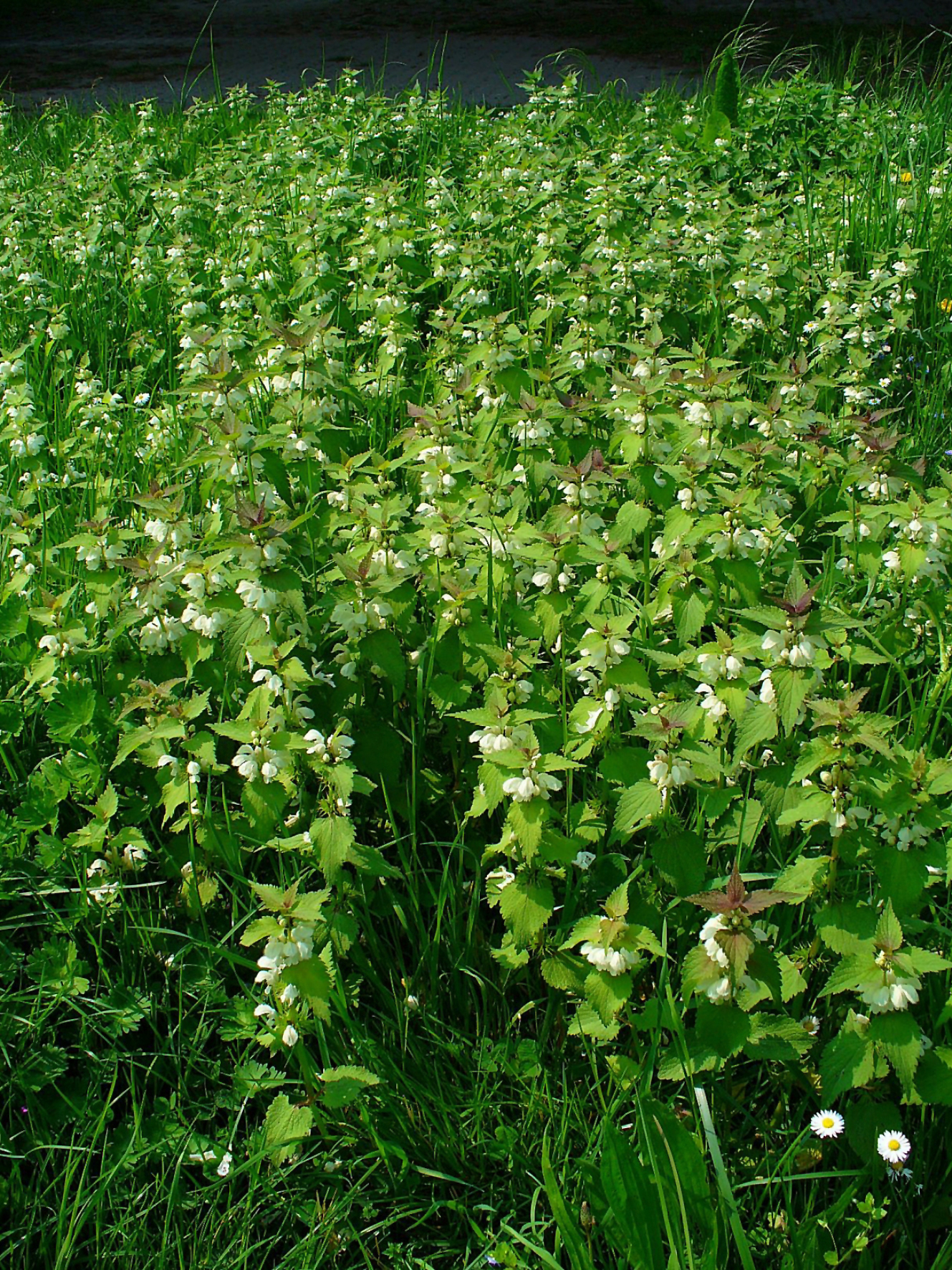
White dead nettle is most reliably identified by combining several features at once. Like all members of the mint family it has a distinctly square stem in cross-section, and these hollow stems are strengthened at the corners by strong fibres (Ballyrobert Gardens, n.d.; Botanical Society of Scotland, 2022). The soft, hairy, heart-shaped and coarsely toothed leaves are stalked and arranged in opposite pairs up the stem, closely resembling those of the stinging nettle but bearing no stinging hairs, so the plant can be handled freely (Botanical Society of Scotland, 2022; Royal Botanic Gardens, Kew, n.d.). The clearest confirmation comes from the flowers: pure white, two-lipped (bi-labiate) blooms roughly 1.8u20132.5 cm long with a hooded upper lip, carried in whorls around the upper stem where the leaves meet it (First Nature, n.d.; Royal Horticultural Society, n.d.). Before the flowers open it is genuinely easy to confuse it with the stinging nettle, and to a lesser extent with other dead-nettles and even young foxglove rosettes, so it is safest to confirm the plant in flower; the white flowers, the absence of any sting and the square stem together rule out the stinging nettle, while the white (rather than reddish-purple) flowers separate it from red dead nettle, Lamium purpureum (First Nature, n.d.; Gardenersu2019 World, 2024). It typically grows as creeping clonal patches rarely taller than about 30u201350 cm, spreading by rhizomes and stolons along disturbed ground (Botanical Society of Scotland, 2022).

When to Collect:

For both teas and tinctures the part to target is the flowering tops, since the flowers (Lamii albi flos) are the richest source of the plantu2019s active constituents u2013 the iridoid glycosides such as lamalbid, the phenylpropanoid verbascoside, phenolic acids like chlorogenic acid, and flavonoids including rutin and tiliroside (Pietrzak and Nowak, 2020). These are the markers used to standardise medicinal flower extracts, so collecting the plant when the flowers are most abundant gives the most potent material (Pietrzak and Nowak, 2020). In practice this means harvesting the aerial parts when the plant is in full bloom, which across the Baltic and wider European range falls roughly from May to August (Ask-Ayurveda, n.d.; Herbal Reality, n.d.). White dead nettle flowers over a long season, so a stand can often be picked more than once through the summer. It is best gathered in mid-morning on a dry day, once the dew has evaporated but before the midday heat, which keeps the delicate flowers and their volatile constituents intact (Ask-Ayurveda, n.d.). The flowering tops can be used fresh u2013 ideal for tincturing while the aromatic compounds are still present u2013 or dried promptly in a single layer out of direct sunlight for teas and longer storage (Herbal Reality, n.d.).

Cultural Notes:

Because it grows side by side with the stinging nettle yet does not sting, white dead nettle has long been a familiar hedgerow and roadside plant in northern Europe, sometimes called the “bee nettle” for the bumblebees and other long-tongued insects it attracts (The Wildlife Trusts, n.d.). An old herbal tradition held that a distillation of the flowers would “make the heart merry” and brighten the complexion, and children have traditionally sucked nectar from the base of the flowers (Grieve, 1931). In Latvian and broader Baltic folk practice it is gathered as a spring potherb and a gentle remedy for women’s complaints (Grieve, 1931; The Wildlife Trusts, n.d.).

Safety Notes:

Generally regarded as safe in culinary amounts and at normal medicinal doses, and unlike the stinging nettle it has no stinging hairs (The Wildlife Trusts, n.d.). As with any traditional astringent, medicinal use during pregnancy or breastfeeding should be approached cautiously, and care should be taken to distinguish it correctly from similar species before foraging (Grieve, 1931; Francis-Baker, 2021). Clinical evidence for its medicinal effects is limited, so it should not replace conventional treatment for serious conditions.

References:

Ask-Ayurveda (n.d.) u2018Lamium album (White Dead-Nettle) in Ayurveda u2013 Benefits, Uses, Medicinal Properties & Healing Applicationsu2019. Available at: https://ask-ayurveda.com/wiki/article/4805-lamium-album (Accessed: 6 June 2026).

Ballyrobert Gardens (n.d.) u2018Lamium albumu2019. Available at: https://www.ballyrobertgardens.com/products/lamium-album (Accessed: 6 June 2026).

Botanical Society of Scotland (2022) u2018Plant of the Week u2013 17 January 2022: the White Dead-nettle (Lamium album)u2019. Available at: https://botsocscot.wordpress.com/2022/01/16/plant-of-the-week-january-17th-2022-the-white-dead-nettle-lamium-album/ (Accessed: 6 June 2026).

Budzianowski, J. and Skrzypczak, L. (1995) ‘Phenylpropanoid esters from Lamium album flowers’, Phytochemistry, 38(4), pp. 997–1001. doi:10.1016/0031-9422(94)00727-B.

Damtoft, S. (1992) ‘Iridoid glucosides from Lamium album’, Phytochemistry, 31(1), pp. 175–178. doi:10.1016/0031-9422(91)83030-O.

First Nature (n.d.) u2018Lamium album, White Dead-nettle: identification, distribution, habitatu2019. Available at: https://www.first-nature.com/flowers/lamium-album.php (Accessed: 6 June 2026).

Francis-Baker, T. (2021) Concise Foraging Guide. The Wildlife Trusts. London: Bloomsbury, p. 48.

Gardenersu2019 World (2024) u2018Complete Guide to Dead Nettlesu2019. BBC Gardenersu2019 World Magazine. Available at: https://www.gardenersworld.com/plants/dead-nettles/ (Accessed: 6 June 2026).

Grieve, M. (1931) A Modern Herbal. London: Jonathan Cape. Available at: https://botanical.com/botanical/mgmh/n/netwhd11.html.

Herbal Reality (n.d.) u2018White Deadnettle (Lamium album): Benefits, Uses, Safetyu2019. Available at: https://www.herbalreality.com/herb/white-deadnettle/ (Accessed: 6 June 2026).

Pietrzak, W. and Nowak, R. (2020) u2018Lamalbid, Chlorogenic Acid, and Verbascoside as Tools for Standardization of Lamium album Flowers u2013 Development and Validation of HPLCu2013DAD Methodu2019, Molecules, 25(8), 1913. doi:10.3390/molecules25081913.

Royal Botanic Gardens, Kew (n.d.) ‘Lamium album L.’ Plants of the World Online. Available at: https://powo.science.kew.org/taxon/urn:lsid:ipni.org:names:448792-1 (Accessed: 6 June 2026).

Royal Horticultural Society (n.d.) ‘Lamium album (white deadnettle)’. Available at: https://www.rhs.org.uk/plants/9810/lamium-album/details (Accessed: 6 June 2026).

The Wildlife Trusts (n.d.) ‘White dead-nettle’. Available at: https://www.wildlifetrusts.org/wildlife-explorer/wildflowers/white-dead-nettle (Accessed: 6 June 2026).

Ajwain – Trachyspermum ammi

Common Names: Ajowan

Genus: Trachyspermum

Parts Used: Leaf, Root, Seed

Medicinal Actions: Digestive Aid, Menstrual cramps, Oral health support, Respiratory Support

Preparation Methods: Tea/Infusion

Tags: Ayurveda, Digestive, Respiratory, Traditional Medicine

Entry Type: Plant

Status: Research

Summary:

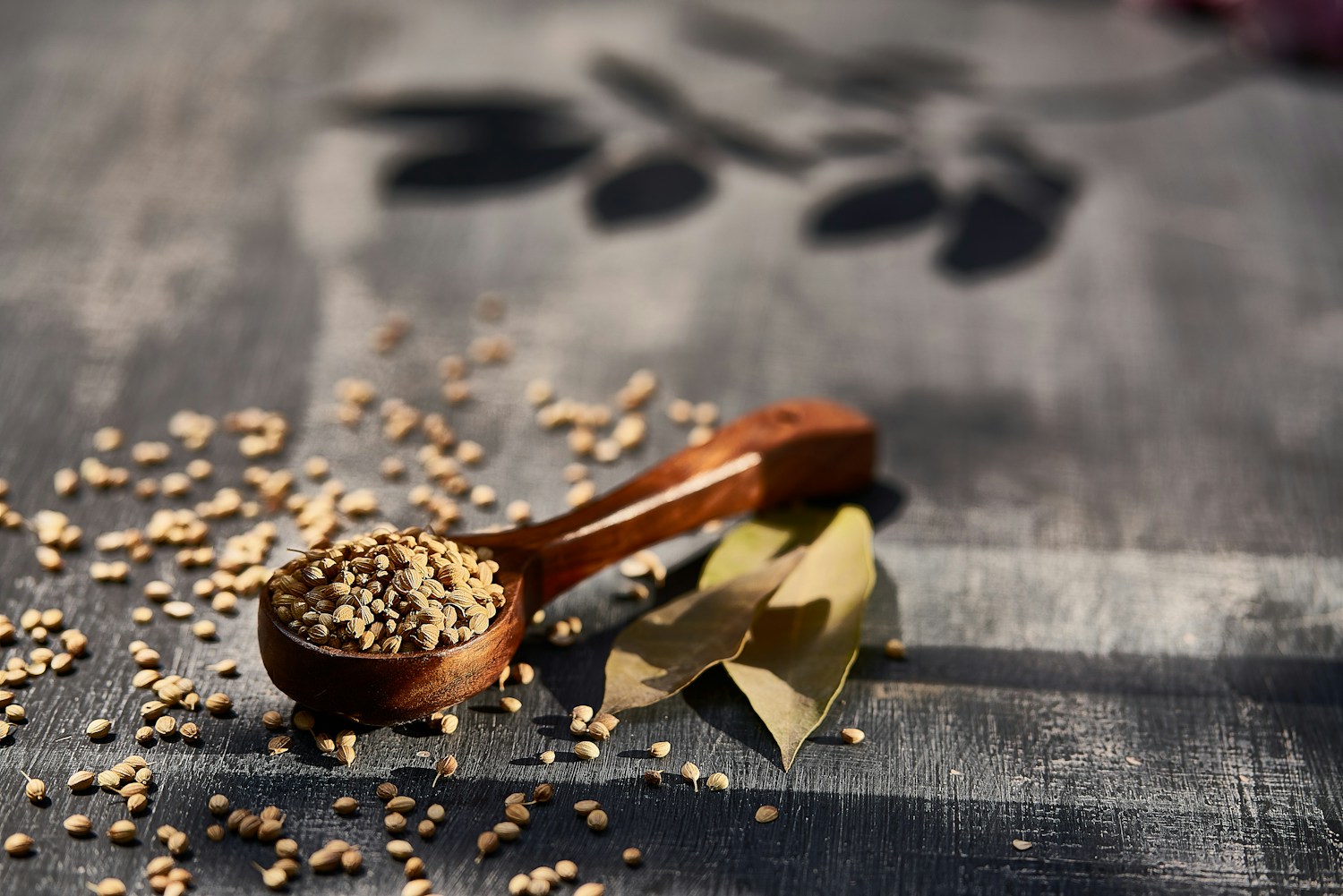
Ajwain (Trachyspermum ammi) is a foundational spice and medicinal herb in South Asian traditions, particularly Ayurveda, where it has been used for 2,500+ years to treat digestive complaints, respiratory conditions, and infections. Its primary bioactive compound, thymol (shared with thyme), is responsible for documented antispasmodic, carminative, bronchodilatory, and antimicrobial effects. Clinical evidence is limited compared to preclinical data, but its long traditional use for flatulence, colic, and nasal congestion aligns well with pharmacological research. Safe at culinary doses; the concentrated essential oil requires caution at high doses (Bairwa et al., 2012; Boskabady et al., 2014).

Distribution:

Primarily native to the Eastern Mediterranean region, specifically Egypt, and parts of Western Asia, including Iran (Persia) and Turkey. (https://www.sciencedirect.com/topics/agricultural-and-biological-sciences/ajwain#:~:text=Ajwain%2C%20although%20primarily%20grown%20and,.kitchenwonders.blogsspot.com.)

Notes:

The dominant bioactive compound is thymol (35–60% of essential oil), with carvacrol, cymene, and terpinene also present. Thymol is the same compound responsible for thyme’s antimicrobial and antispasmodic properties — which explains the folk name ‘Indian thyme’ for ajwain (Bairwa et al., 2012).

Digestive effects: Thymol relaxes smooth muscle in the gastrointestinal tract, reducing intestinal cramping and facilitating passage of gas. This is the primary mechanism behind its traditional use for flatulence, indigestion, and colic. In vivo studies confirm antispasmodic and carminative activity (Boskabady et al., 2014).

Respiratory: Inhaling steam from ajwain water (crushed seeds in hot water) is a traditional South Asian remedy for nasal congestion and bronchospasm. Thymol has demonstrated bronchodilatory effects in animal models and is a component of commercial expectorant preparations (Boskabady et al., 2014).

Antimicrobial: Ajwain essential oil shows strong activity against common food-borne pathogens including E. coli, Salmonella, and Aspergillus in vitro. Thymol has well-established bactericidal and fungicidal properties (Shova et al., 2020).

Oral health: Thymol is an active ingredient in Listerine mouthwash; ajwain extract has shown anti-plaque and antibacterial effects against oral pathogens in vitro (Awan et al., 2021).

Ashwagandha – Withania somnifera

Common Names: Indian Ginseng, Winter Cherry, Poison Gooseberry, Ajagandha, Kanaje Hindi, Asgand

Genus: Withania

Parts Used: Leaf, Root

Medicinal Actions: Anti-inflammatory, Anticancer, Antidiabetic, Antioxidant, Cognitive support, Fertility, Immune Support, Physical performance / strength improvement, Sedative

Preparation Methods: Capsule/Pill, Decoction, Powder, Tea/Infusion, Tincture

Tags: Nervous System, Traditional Medicine

Entry Type: Plant

Status: Research

Book Part: Materia Medica

Summary:

Ashwagandha (Withania somnifera) is a premier adaptogenic herb in Ayurvedic medicine, extensively researched for stress reduction, cognitive enhancement, and physical performance. The root contains withanolides as primary bioactive compounds responsible for most therapeutic effects. Clinical evidence supports efficacy in reducing stress and anxiety, improving sleep quality, enhancing cognitive function, supporting male fertility, increasing muscle strength and recovery, and modulating immune function. Also demonstrates anti-inflammatory, antioxidant, neuroprotective, cardioprotective, and anti-diabetic properties in research studies.

Distribution:

Ashwagandha (Withania somnifera) is native to a broad range spanning the Indian subcontinent, northern Africa, the Mediterranean, the Canary Islands, and parts of the Middle East. It grows naturally in dry, stony soils and semi-arid habitats in India (particularly in the states of Rajasthan, Punjab, and Madhya Pradesh), Pakistan, Afghanistan, and the Mediterranean. India remains by far the largest producer globally, cultivating it extensively in Rajasthan, Madhya Pradesh, Haryana, and Uttar Pradesh. Not found wild in Latvia; imported as root powder or supplement extracts (Royal Botanic Gardens, Kew, n.d.; Singh et al., 2011).

Notes:

Root and leaf have different chemical compositions. Clinical trials show significant improvements in stress scores, anxiety levels, sleep parameters, testosterone levels, sperm quality, muscle mass, strength, and VO2 max. Demonstrates neuroprotective effects in neurodegenerative disease models. Root extract standardized to withanolides is most commonly studied form.

Cultural Notes:

Used for over 3,000 years in Ayurvedic medicine, considered one of the most important herbs and called ‘Rasayana’ (rejuvenator/tonic). The Sanskrit name means ‘smell of horse,’ referring both to the root’s odor and the belief it imparts horse-like strength and vitality. Known as the ‘Queen of Ayurveda’ for its broad therapeutic effects. Also used in traditional Unani medicine. Historically mentioned in ancient Ayurvedic texts including Charaka Samhita and Sushruta Samhita. Traditionally prescribed for stress, fatigue, pain, skin diseases, diabetes, gastrointestinal conditions, rheumatoid arthritis, and epilepsy. Used as a general tonic to improve energy, health, and longevity.

Safety Notes:

Generally well-tolerated in clinical trials at doses up to 600 mg/day for up to 12 weeks. Common side effects may include mild drowsiness, gastrointestinal upset, and diarrhea at higher doses. Contraindicated during pregnancy due to potential abortifacient effects. May interact with sedatives, immunosuppressants, thyroid medications, and blood sugar medications. People with autoimmune diseases, hyperthyroidism, or scheduled for surgery should consult healthcare providers before use. May cause allergic reactions in sensitive individuals. Not recommended for children without medical supervision.

Chamomile: The Gentle Evening Companion

Few plants feel as welcoming as chamomile. Its small daisy-like flowers have been steeped into soothing teas for thousands of years, valued for the way they ease tension and invite rest.

A warm cup in the hour before bed can become a gentle signal to your body that the day is closing. Pair it with a dimmed room and a few slow breaths, and you have a simple ritual worth returning to. As always, if you are pregnant or taking medication, check with a practitioner before making any herb a daily habit.

The Quiet Power of Adaptogens

Adaptogens have been used for centuries in traditional medicine systems. They work by supporting the body’s natural ability to cope with stress, gently nudging us back toward balance rather than forcing a single effect. In this piece we explore ashwagandha, rhodiola, and holy basil — how they work, who they suit, and how to fold them into a calm daily ritual without overcomplicating your routine.

Calendula

Calendula (Calendula officinalis), sometimes called pot marigold, has been used for centuries in topical preparations.

**Traditional uses:** soothing and supporting the appearance of healthy skin; a common ingredient in balms, salves, and infused oils.

**Parts used:** the flower petals.

**Notes & cautions:** typically used externally. Those allergic to plants in the daisy family should patch-test first.

a

this is a post in the blog category.

It should show up both in the main home page and the separate blog page (omniasana.bio/home/blog)

e
c